It can be surprisingly difficult to get genre films produced in the UK and Ireland. Our film industries have traditionally leaned heavily towards drama, with genre filmmaking often treated as something of a niche pursuit. For filmmakers who want to write or direct horror, science fiction, fantasy or other forms of genre cinema, there can come a point where the opportunities available at home simply aren’t enough.
For some, that has meant looking overseas.
Recent examples include Irish filmmakers Lee Cronin and Damian McCarthy, both of whom have established themselves as exciting voices in horror before making the leap to larger international productions. Go further back and there are plenty of other examples. Christopher Nolan, for instance, ultimately had to move beyond the traditional UK industry to pursue the scale and types of films he wanted to make.
That should give the UK and Irish film industries something to think about.
If we want to compete internationally, we need to take genre filmmaking, and particularly horror, much more seriously.
Horror Doesn’t Need Hollywood Money
One of the most frustrating arguments against producing genre films in the UK and Ireland is the obvious comparison with Hollywood. We simply don’t have the same level of financing available for many productions.
But when it comes to horror, that doesn’t necessarily have to be a disadvantage.
Horror is one of the few genres where limited resources can actually become part of the creative process. A smaller budget can encourage filmmakers to focus on atmosphere, character, sound design, practical effects and visual storytelling rather than spectacle. In fact, some of the most effective horror films are built around precisely these limitations.
There is also a long-standing appetite among horror audiences for independent and low-budget filmmaking. Horror fans are often willing to seek out films that other audiences might overlook, particularly when a film has a distinctive visual identity or an original concept.
That makes horror an opportunity for the UK and Ireland rather than simply a challenge.
Hokum Shows What Is Possible
I watched Damian McCarthy’s Hokum on Blu-ray this week, and it is a film I absolutely love. I would recommend it to anyone with an interest in contemporary horror.
I was already a big fan of McCarthy’s previous films, Caveat and Oddity, but with Hokum I think he has taken his abilities and filmmaking style to another level.
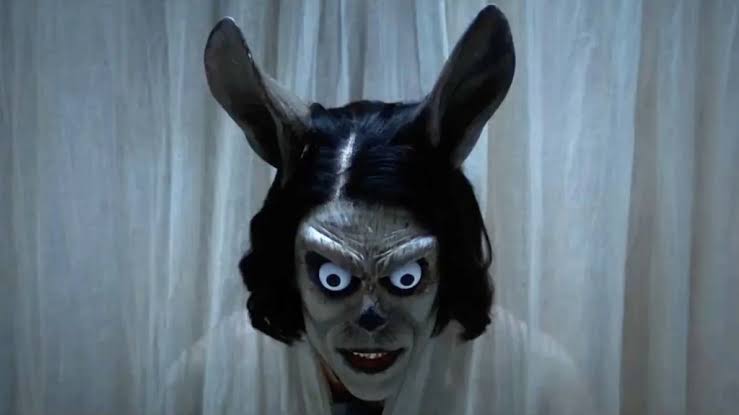
One of the film’s most striking elements is Jack the Donkey. Jack isn’t a traditional monster, but he is nevertheless a hugely memorable visual presence. There is something genuinely nightmarish about the way the character is presented, and McCarthy demonstrates an impressive ability to turn something seemingly ordinary into an unsettling image.
The film’s colour grade is another particular strength. Hokum creates a dark, atmospheric visual world while still allowing its colours to have real prominence. It is a carefully constructed aesthetic that contributes enormously to the film’s sense of unease.
Perhaps most importantly, Hokum demonstrates that you don’t need an enormous budget to create a horror film with a distinctive cinematic identity.
The Opportunity for the UK and Ireland
Hokum represents exactly the type of production that the UK and Irish industries should be looking to support.
An emerging Irish director. A feature-length horror film. A largely contained setting. A relatively focused production that places creativity and atmosphere at the centre of the filmmaking.
This isn’t a model that requires Hollywood-scale investment.
Instead, it requires producers and funding bodies to recognise that genre cinema can be commercially viable, internationally appealing and artistically ambitious.
The UK, in particular, should be doing more to get its own genre productions off the ground, while also looking for greater collaboration with Irish production companies such as Tailored Films. There is no reason why the UK and Ireland cannot develop a stronger shared ecosystem for genre filmmaking.
The talent is already here.
The locations are here.
The audiences are certainly there.
What is missing is the confidence to invest in the filmmakers who want to make these films.
If the UK and Ireland want to retain their emerging genre talent rather than watching filmmakers leave for Hollywood, then we need to start treating horror not as a lesser form of cinema, but as one of the industry’s biggest opportunities.
Hokum is a perfect example of what can happen when a talented filmmaker is given the opportunity to realise a distinctive horror vision.
The question is whether the next Damian McCarthy will be given that opportunity here.
Leave a Reply